Cantonese stir-fry lives or dies through warm administration. Not simply any warm, however instant, targeted warm that kisses the surface of each factor. The wok is less a pan and extra a furnace in thin steel form, and selecting the appropriate size is the quiet determination that determines even if you flavor wok hei or simply sautéed veggies. I discovered this the lengthy manner, burning scallions in a 12 inch nonstick skillet, then ultimately shopping for a true carbon steel wok and researching how a quarter inch modification involved topics. Once you be aware how size affects heat, ability, and action, the choice turns into fundamental and personal.
Wok size is absolutely not simply diameter
When of us ask what length wok do I need, they often imply diameter. That issues, but no longer with the aid of itself. The desirable person of a wok comes from a triangle of forces: diameter, intensity and curvature, and thickness. Diameter affords you runway; curvature determines how delicacies slides and nestles; thickness dictates how speedy warm strikes and how much vitality the wok can keep between tosses. Cantonese stir-fry, with its flash cooking and nested timing, asks for a balanced geometry that continues meals just about warm without crowding. Get the steadiness fallacious and also you both steam your shrimp or scorch your aromatics.
Diameter additionally changes how the heat out of your burner spreads underneath the wok. On an average dwelling house selection, the most up to date circle is 4 to 6 inches throughout. A smaller wok retains that warmness lower than the properly, although a totally enormous wok spreads it too thin and strands your materials up the cool slopes. This interplay is why an eleven to 14 inch wok can outperform a sixteen inch showpiece in maximum Western kitchens.
The homestead burner truth check
If your kitchen does no longer have a business jet burner or a devoted outdoors wok burner, assume a optimum of 10,000 to 22,000 BTU on a universal gas cooktop, in certain cases 12,000 to 18,000 on higher-end residential levels. Induction and electric are a completely different animal, concentrating warmness by means of a flat factor. They should be mighty in watts, however the heat footprint is still smaller and flatter. The appropriate wok length harnesses this focused patch.
On a 12,000 BTU fuel burner, a 14 inch Cantonese wok looks heroic yet traditionally disappoints. The flame are not able to simply warm this kind of large floor. Food climbs the edges and cools, and you emerge as with faded red meat and watery bell peppers. Step right down to 12 or 13 inches, and without notice the warmth footprint matches the wok’s abdominal, and your aromatics explode with fragrance the instant they hit.
For induction, a flat-bottom wok in the 12 to 13 inch quantity solves two problems instantly: good touch and top warmness concentration. The curve is shallower than a spherical-backside, so your manner shifts quite, but your sear improves when you consider that the heat meets the steel over a larger, strong place.
The vintage Cantonese solution through the numbers
For Cantonese stir-fry, wherein you prepare dinner in small, rapid batches and prioritize heady scent and snap, here is a realistic measurement map built from years of service wok-part and masses of abode checking out:
- Solo cook dinner on a traditional home fuel burner: 12 inch spherical-bottom carbon metal in the event that your grate can cradle it, in any other case a 12 inch flat-bottom. This length lets you tackle 200 to 400 grams of protein plus vegetables, which is perfect for one beneficiant or two mild parts. It provides you management, fast recovery, and enough wall peak to toss without launching garlic across the kitchen. Two to four servings on a mid-to-prime house gas burner: 13 inch carbon metallic, circular-backside if your setup makes it possible for it. The extra inch provides obvious capacity with out overwhelming the heat footprint. You can movement from 250 grams to 500 grams of protein plus veggies and nonetheless secure color and chunk.
That answers the functional variant of what measurement wok do I desire for maximum abode cooks: 12 or 13 inches, carbon steel. If you’re cooking for a family unit of 4 traditionally and your burner is powerful, a 14 inch can paintings, however it asks extra of your warmness and your wrist.
Round-bottom or flat-bottom, and why length makes a decision it
Round-bottom woks are the typical Cantonese desire, with a focused nicely that attracts oil and aromatics right into a warm pool. This geometry amplifies the Maillard response at the bottom and makes tossing suppose usual. If your burner grate has a wok ring or prongs that stably hold a spherical-bottom, go with it in 12 to 13 inches. The curvature of a 12 inch circular-backside puts onions, ginger, and garlic precise where the flame peaks, then lets you pull them up the sides to pause the cooking, an vital rhythm for Cantonese timing.
Flat-backside woks provide balance on flat grates, electrical coils, and induction glass. They business a touch of the rolling, liquid-like move of a round-bottom for a vast searing platform. Size interacts with structure here: a 12 inch flat-backside has a enormously generous flat area that mimics a skillet, then curves into partitions that you just use to complete vegetables or cling par-cooked pieces faraway from the heat. At 14 inches, many flat-backside woks turn out to be so broad that abode burners combat to retain the middle ripping sizzling.
In short, spherical-backside for gasoline with a hoop, flat-bottom for everything else, and shop the diameter modest.
Why thickness concerns nearly as a great deal as diameter
Carbon metal woks fluctuate from about 1.2 millimeters to 2 millimeters thick. Thicker walls shop more warm, which seems very best, however they heat up slower and demand greater BTUs to succeed in the candy spot. In a Cantonese kitchen with roaring burners, 2 millimeters sings. On a suburban fuel variety, 1.five millimeters by and large plays more advantageous. The thinner metallic heats briskly, recovers rapid after bloodless cuisine hits, and responds to tiny alterations in flame. Paired with a 12 or 13 inch diameter, 1.five millimeters provides you nimble control.
Anecdotally, the superior domicile outcomes I see come from a 1.four to 1.6 millimeter, 12 inch round-backside on a 12,000 to 15,000 BTU burner. The wok reaches searing warmness in two to three mins, doesn’t sag less than a 0.5 pound of sliced beef, and lets in crisp snow peas to dwell bright.
How an awful lot meals in keeping with measurement, realistically
Cantonese stir-fry respects small batches. The heat must dominate the moisture, not the alternative method around. If you purpose for real texture and wok hei, here are fair capacities that stay you honest:
- 12 inch: 200 to 450 grams overall substances in step with batch, based on moisture. Sliced white meat thigh and dry vegetables like onion and bell pepper care for the excessive stop. Wet tofu or blanched veggies sit down closer to the low stop. thirteen inch: 300 to six hundred grams. This is the candy spot for a family members pan, still nimble adequate to brown aromatics but with slightly extra forgiveness. 14 inch: four hundred to 750 grams, however in simple terms if your burner can continue up. With underpowered heat, the more space will become an incubator for steam.
These numbers imagine you're stir-frying with speed. If you spot puddles forming, scale back the batch or pre-dry vegetables after washing.
The elusive wok hei and the way size helps or hurts
Wok hei is the smoky, savory perfume that clings to food after blistering heat, oil, ideal wok size for family and micro-flare-americahave achieved their work. Size aspects in through shaping how food travels from the new pool to the cooler slopes, how speedy steam escapes, and whether possible toss with self belief. Too small a wok, and meals crowd the base, sweating in place of searing. Too super, and the heat isolates at the ground whereas the partitions cool, so your toss sends foodstuff into a chill.
In the 12 to 13 inch range, that you would be able to flick the wrist and notice a curtain of nutrients arc with the aid of warmth, then return to the contact level with brand new oil. That cycle is wherein the delicate smokiness builds. The pan should be easy satisfactory to raise and attitude, and the diameter needs to not pull the mass of nutrition too a long way from the heart. Big eating place woks escape with increased diameters because their burners create a volcano of warmth that envelops even the top partitions. Home burners do no longer.
Gas, induction, and electric powered: matching length to energy
Gas gives you a ordinary partnership with around-bottom woks. The flame licks round the curve, and the sizzle feels alive. With fuel, 12 or 13 inches in round-backside is the so much professional path. If your grate should not dangle a spherical-bottom, a 12 inch flat-backside paired with a removable wok ring nonetheless produces impressive outcome.
Induction delivers instant strength but in simple terms in which the coil sits. It excels with a flat-backside wok. Size topics extra right here, considering the fact that a 12 inch flat-bottom will have a important flat quarter in direct contact with the coil, surrounded with the aid of curved facets that get warm moment-hand. Keep to 12 inches for most induction cooktops, 13 in the event that your unit has a huge coil. I’ve cooked scallion pork on a three.7 kW induction region with a 13 inch flat-backside, and it sings as long as you preserve batches lean.
Electric coil or radiant glass is the least forgiving for wok cooking, yet still doable with a 12 inch flat-bottom carbon steel. Preheat wholly, stay batches small, and do not chase a 14 inch kind thinking higher solves the heat predicament. It does now not.
How your peak and stove height matter
If you could have ever watched a Cantonese chef toss from the elbow, you recognize the motion is nearly vertical. The wok pivots at the wrist, the foodstuff climbs, then falls lower back into the recent oil. On a tall counter, a big wok provides leverage which could stress your arm. I am overall top, and a 14 inch wok on a widely wide-spread 36 inch counter with a prime pot grate forces my shoulder up at some point of an extended cook. That expenses fluidity. A 12 inch wok sits decrease, feels nimble, and makes it simpler to secure cadence. If you're tall or have a diminish fluctuate, a thirteen inch may really feel perfect. Consider ergonomics which includes warmness.
Carbon steel and the seasoning dance
Material and measurement interact with seasoning. Carbon steel is the standard for outstanding motive. It takes seasoning swift, releases foodstuff with a minimalist slickness as soon as advanced, and responds to warmth like a sporting activities auto. A smaller wok, 12 or thirteen inches, seasons extra lightly on dwelling house burners simply because you'll be able to move the warmth over each and every inch of the inside. With a 14 or sixteen inch, you in most cases turn out with a stunning black core and light top partitions. Those faded zones can stick till many classes of use.
If you want to deep-fry prior to a stir-fry, the 12 inch holds kind of 1.five to two liters of oil to a intensity that permits small batches of dumplings or shrimp to swim. It heats rapidly and recovers properly. The 14 inch desires greater oil to achieve the equal intensity, that's wonderful on a extreme burner but high-priced and sluggish on a modest one.
Real-world dish examples and how measurement performs out
Beef chow enjoyable tells the fact about a wok. The rice noodles clump until the wok is blazing, the oil is contemporary, and you have got house to lay noodles flat in the past tossing. In a 12 inch circular-backside on a ready fuel burner, you prepare dinner 250 to 300 grams of noodles with 150 grams of red meat, scallions, and bean sprouts in one sparkling batch. The noodles meet the new pool, sear, then slide up the sides as you fold. Try to push 500 grams of noodles in that comparable 12 inch, and the floor location can’t avert up. You trade char for steam.
For gai lan with oyster sauce, dimension issues another way. Blanch the gai lan, dry it, then flash it with oil, ginger, and a ladle of sauce. A 12 inch flat-bottom provides you a large contact patch to capture the glaze devoid of pooling. A 14 inch on a dwelling burner feels grand but cools at the rims, and your stems on no account slightly pick up the gloss you see in restaurants.
Kung pao white meat depends on dry chile body spray and crisp peanuts. A 12 or thirteen inch keeps the chiles on the brink of warmness, letting them bloom devoid of burning. A increased wok on a small burner forces you to chase warm spots and the chiles scorch while the peanuts stay light.
When to elect 14 inches, and while to resist
There are great purposes to own a 14 inch wok, even at home. If you've got a top-output fuel range or an outdoor burner which could push 60,000 BTU or extra, a 14 inch around-backside becomes a pleasure. You attain tossing headroom, you can still cook dinner for 4 with no trouble, and the added curvature lets you park par-cooked models up the wall. I use a 14 inch around-bottom on an outdoor jet burner to prepare dinner asparagus beef for 6, and it certainly not misses.
If your warmth is understated or your kitchen compact, withstand the romance of scale. A 14 inch on a susceptible burner is sort of a grand piano with a damaged pedal: really good to inspect, irritating to play.
Handle kinds, lids, and how they tie back to size
Cantonese woks historically have two quick loop handles. Mandarin-style woks have an extended stick handle and a helper loop. For 12 to thirteen inch sizes, either work, but the stick manage makes tossing more easy on a domicile range, incredibly in the event that your pan rails are top. Once you stream to 14 inches and above, the loop handles feel safer and more balanced, yet they restrict the flowery toss. Your procedure adapts: more spatula work, greater push-and-fold, less complete-air toss.
Lids be counted for Cantonese braises and short steam finishes. A 12 inch wok lid seals easily, traps steam successfully, and returns you to dry warmness in seconds. Oversized lids for sizeable woks can dribble condensation down the sides, washing away seasoning in the event you should not careful. Another small element in choose of the 12 to thirteen inch for abode use.
Cleaning, care, and the small-wok advantage
A smaller wok is less demanding to refreshing and hold. After a top-warm consultation, you desire to deglaze with a touch of scorching water, brush evenly, and dry over warmness. A 12 inch warms and dries rapid, so the patina builds with fewer sticky incidents. If your wok is too full-size in your sink, you grow to be warding off it on weeknights, which defeats the level. Convenience is a luxurious too.
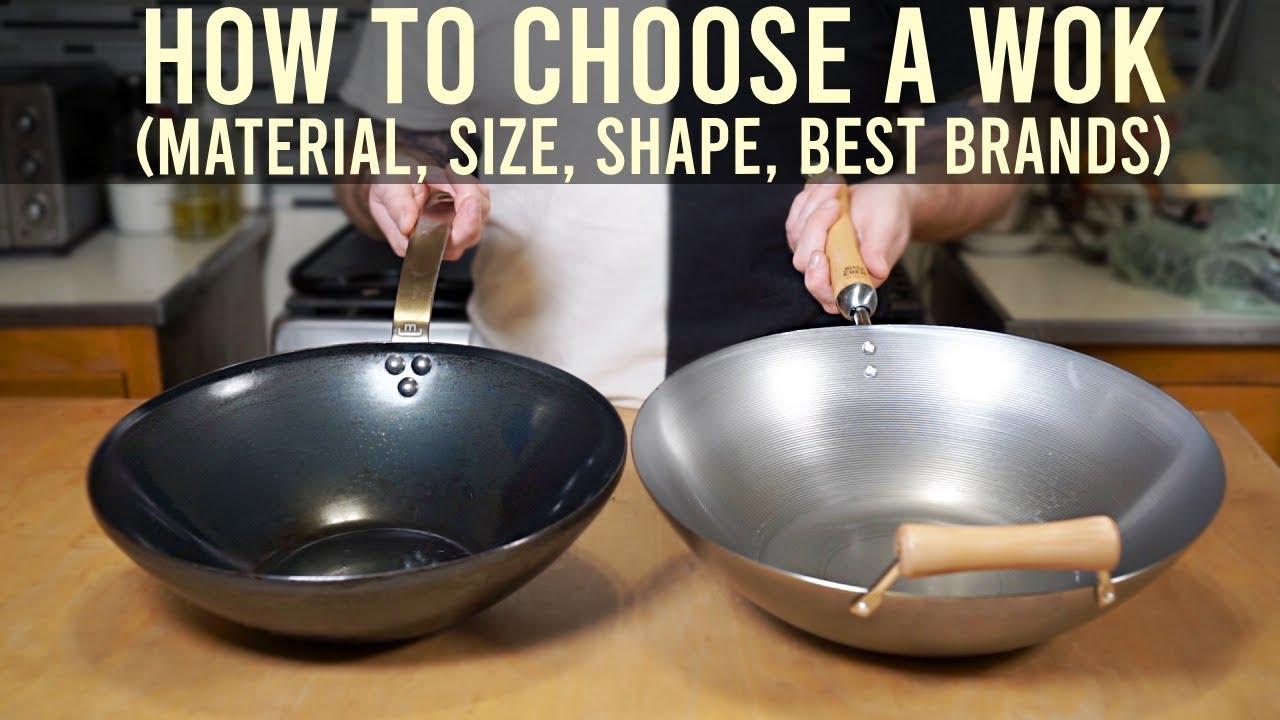
Edge circumstances: tiny kitchens, widespread households, strong point dishes
If your kitchen is the dimensions of a ship’s galley and you prepare dinner for one, a 10 or 11 inch carbon metallic wok is defensible. It heats at lightning pace on a small burner and can flip out an ideal egg fried rice with a handful of day-historic grains and scallions. It struggles with large noodles and giant leafy greens, yet for tight quarters and lean portions, it can be nimble.
If you always cook for six on a physically powerful number, you might run a couple of 12 inch woks in place of one sixteen inch. Two synchronized batches beat one overloaded pan. This mirrors what happens on the line in a hectic Cantonese kitchen: assorted small pans, every single dish cooked to order.
For dishes like Cantonese steamed fish or claypot rice, dimension is dictated by using the vessel you position internal or the rice amount, now not strict stir-fry rules. A 13 inch wok with a hoop can enhance a medium steaming rack and nevertheless go away area for water move. Oversized woks waste water and time.
Precision solutions for straight forward scenarios
Here is a concise book that marries kitchen reality with the query what measurement wok do I desire:
- Gas stove beneath 15,000 BTU consistent with burner: 12 inch carbon steel, around-bottom if your grate helps it, 1.five millimeter thickness. Gas stove 15,000 to 22,000 BTU: 13 inch carbon steel, spherical-bottom desired, 1.five to 1.8 millimeters. Induction with medium coil: 12 inch carbon steel, flat-bottom, 1.5 millimeters. Induction with sizeable coil or bridge: thirteen inch flat-bottom, 1.5 to at least one.8 millimeters. Electric radiant or coil: 12 inch flat-bottom, preserve batches small, preheat longer.
These don't seem to be guidelines carved in stone, but they will land you in the area the place procedure flourishes.
Technique unlocks the dimensions you choose
The correct size helps, yet ability seals the deal. Preheat unless a drop of water skitters and evaporates just about immediately. Add oil, shimmer, then aromatics. Keep batches small enough that the sizzle by no means fades. Use the perimeters as a resting quarter, then fold back down. With a 12 or thirteen inch wok, you should still suppose the nutrition breathe. If it smothers, you’ve overloaded. If it burns all of a sudden, your oil was too low or your warmth too prime with no movement.
The pleasure, when it clicks, is prompt: cabbage edges charred, stems crisp; beef blushed and lacquered; garlic golden yet no longer sour. The wok turns into an extension of your hand, and the size disappears into the motion.
Buying assistance that respects either craft and comfort
Seek a carbon metallic wok with a mushy indoors, no heavy nonstick coating, and a nontoxic handle. Favor riveted or properly-welded joints. Weight have to think purposeful but liftable, more or less 1.1 to 1.7 kilograms for a 12 to 13 inch pan relying on thickness and handle. If it looks like a kettlebell, one could now not achieve for it. If it feels flimsy, it is going to warm-spot and dent.
Expect to pay modestly for carbon metallic, broadly speaking less than premium clad skillets, but the returns are grand. Spend on a right kind wok ring if applying a spherical-bottom on fuel. On induction, ascertain your flat-backside sits flush. A lid that matches is valued at including, extraordinarily in case you cook vegetables or do quickly sauce finishes.
Final preparation for a transparent decision
For respectable Cantonese stir-fry at abode, in which cooking occurs on a conventional gasoline, induction, or electric range, the reply is elegantly easy: determine a 12 or 13 inch carbon metallic wok matched for your warm resource. Round-bottom for fuel with aid, flat-backside for induction and electric powered. Keep thickness around 1.five millimeters for short response. Let capability be sincere, batches compact, and motion active.
The luxurious here is not in excess, but in precision. A thoughtfully sized wok amplifies all the pieces you placed into it, from the heady scent of sliced ginger hitting scorching oil to the sheen on a plate of charred choy sum. Once you feel that unity of flame, steel, and action, you forestall asking what size wok do I need and start asking what you're going to cook subsequent.